
Statistical & Data Management Core
What We Do
As a key research facility in the USC Research Center for Child Well-Being, the Statistical & Data Management (SDM) Core engages in the full spectrum of design, data, statistical, and analytic activities associated with implementation of research projects. The SDM Core includes seasoned data management and programming staff, and accomplished statisticians who are experienced in multidisciplinary collaborations in many study designs, public health, psychometrics, and data science.
Core Goals
(1) To provide high-quality support to RCCWB investigators regarding the planning and execution of research projects with respect to both data management and statistical analyses.
(2) To foster high-quality application of state-of-the-science statistical methods for multi-level data, causal inference, survival analysis, Bayesian methods, missing data, measurement error, structural equation modeling, and high-dimensional inference.
(3) To guide RCCWB investigators with respect to the development of cogent analytic plans in extramural research grant applications.
(4) To develop greater capacity for providing data and statistical services that add to the University’s infrastructure
Core Services
Data Management Support
- Codebook creation and refinement
- Database development and management
- Data entry or capture
- Documentation for indexing, data, and metadata
- Interface with data repository
Expert Consultation
- Research design
- Power estimates and issues
- Analytic planning
- Handling of missing data
- Results sections in publications
Implementation & Application
- Analytic programming
- Primary, secondary, and exploratory statistical analyses
- Collaboration on presentations and publications
Who We Are
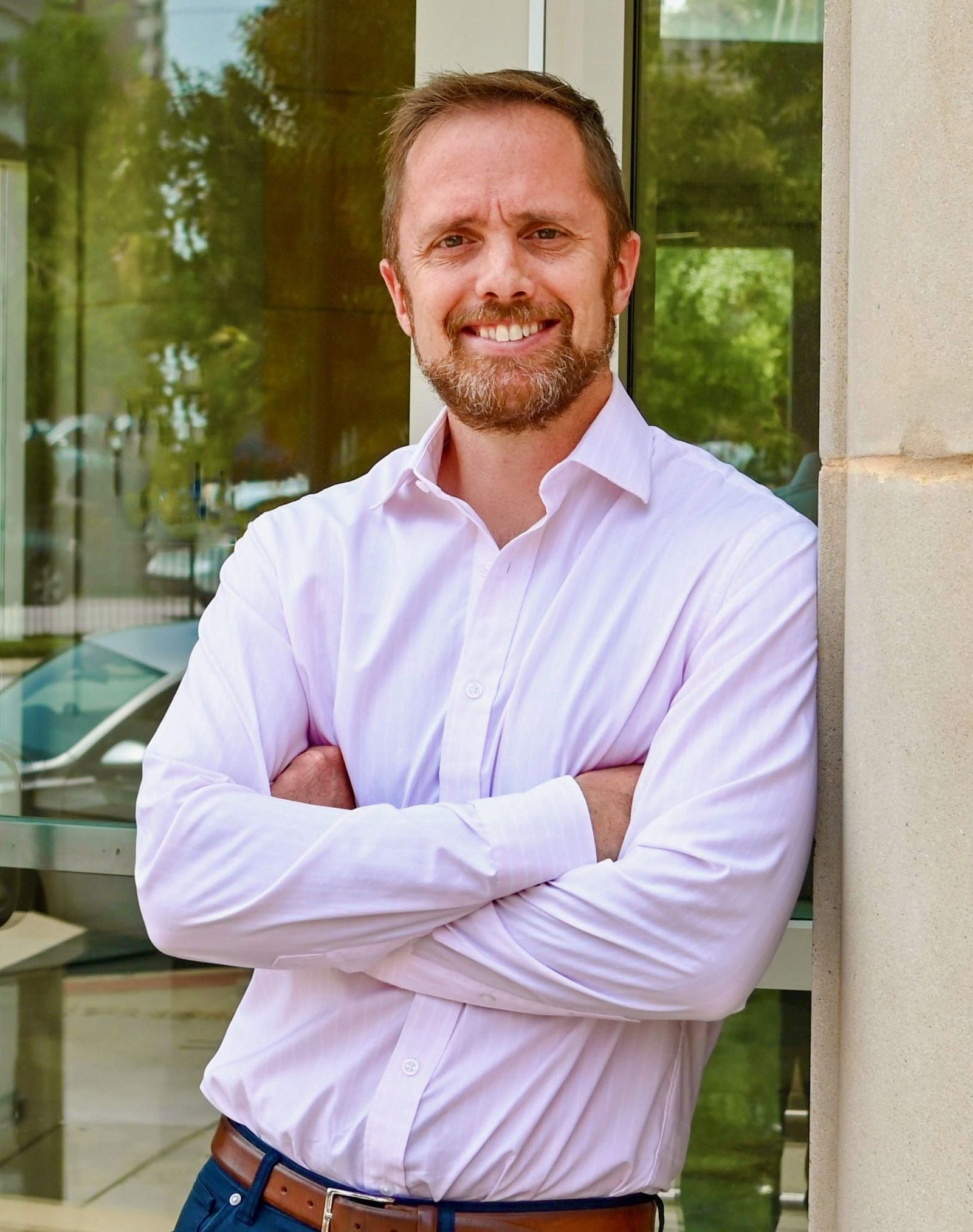
Alexander McLain
The SDM Core leader, Dr. Alexander McLain, is a Professor of Biostatistics with expertise that includes statistical models for longitudinal, clustered, and survival data, as well as statistical methods for measurement error and missing data. He has substantial experience directing and collaborating on relevant grant projects. He has served as PI on grants focused on the development of statistical methods in length-biased survival analysis with application to estimating infertility prevalence and on research that uses small-area estimation techniques to estimate the prevalence of mental health outcomes (e.g., ADHD, ASD) in children and youth. He has contributed as co-I to research projects investigating physical activity, sedentary behavior, and weight status in infants and toddlers and measuring programmatic impact on pediatric obesity among low- and high-income households. Dr. McLain is an associate editor for Statistics in Medicine, a member of the advisory board for the Eastern North American Region (ENAR) of the International Biometric Society, and a Statistical Consultant for the American Journal of Obstetrics and Gynecology.

Brianna Tennie
Brianna Tennie is the data and statistical analyst for the SDM Core. She received her MPH in Epidemiology from the University of South Carolina and has prior experience in epidemiology and conducting mixed-methods research. In her role as a data and statistical analyst, she assists project leaders in getting their data ready for analysis through the processes of data cleaning, data wrangling, and conducting quality control checks to ensure data validity and accuracy. She also performs statistical analyses for investigators during their process of submitting manuscripts, writing grant proposals, and presenting data at conferences.

Donita White
Donita White is the data manager for the SDM Core. She has over 25 years of experience in several phases of data-related activities in experimental and longitudinal studies, including the development of data and construct codebooks; field data collection with children, families, and schools; longitudinal tracking of research participants; data entry, capture, and checking; and coordinating with faculty investigators and research teams. She has contributed to many different kinds of studies pertaining to children and families in a variety of communities and settings.

Donna Coffman
Dr. Donna Coffman is a Professor of Psychology and former T32 postdoctoral fellow from The Methodology Center at Pennsylvania State University. She is an expert in methods for causal inference, missing data, and intensive longitudinal data. She was the PI of an R03 grant from NIDA to study causal inference and mediation, and the project director of a NIDA P50 center grant research component to study causal inference, mediation, and moderation in multilevel (i.e., nested) data structures. She received a K01 early career award through the Big Data to Knowledge (BD2K) initiative to develop and apply methods for analyzing data from wearable and mobile devices that enable development of adaptive, individualized, health-behavior interventions. She was awarded an R01 funded by NCI and OBSSR to develop methods for mediation with intensive longitudinal data, such as that collected using ecological momentary assessments. In addition to developing methods, she has collaborated as the biostatistician on numerous grants in the areas of physical activity, prevention science, and childhood obesity prevention.

Rahul Ghosal
Dr. Rahul Ghosal is an Assistant Professor in the Department of Epidemiology and Biostatistics at the University of South Carolina. His research focuses on developing novel statistical methods using functional and distributional data analysis approaches for modelling wearable data, e.g., physical activity data collected using accelerometers, heart rate, energy expenditure, and continuously monitored blood glucose data with applications in the areas of gait, sleep, aging, cognitive function, Alzheimer’s disease, cardiovascular disease, and diabetes. His other research interests and expertise in statistics include longitudinal data analysis, variable selection, nonparametric regression, shape-restricted regression, Bayesian inference, and survival analysis.
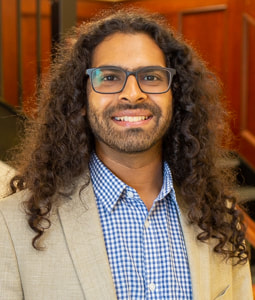
Sarfaraz Serang
Sarfaraz Serang, PhD, is an Associate Professor of Psychology at the University of South Carolina. Trained as a quantitative methodologist, his research focuses on statistical methods for assessing change over time, utilizing longitudinal modeling, structural equation modeling, mediation analysis, and data mining. He has written methodological papers on identifying groups of people who change in different ways and has applied his expertise to studies of family stress and adolescent alcohol and substance use during the COVID-19 pandemic. His work on exploratory mediation analysis via regularization has been used to identify potential mediators of suicidality in adolescents.